Table of contents
Related Posts
Industry Background

In the automotive sector, electronic components such as sensors must consistently perform under demanding environmental conditions, including thermal cycling, vibration, humidity, and chemical exposure. To ensure durability and reliability, manufacturers rely on two-component (2K) epoxy potting, which provides mechanical protection and environmental sealing.
As production volumes grow, maintaining precision, consistency, and efficiency in adhesive dispensing becomes critical to ensure product quality while controlling operational costs.
Customer Introduction
The customer is a Bengaluru-based manufacturer specializing in high-performance automotive sensors. Serving major OEMs and Tier-1 suppliers, their production exceeds 2,000 units per shift. Each unit requires a precisely metered 1.2-gram application of two-part epoxy adhesive having 4:1 mixing ratio. The epoxy potting compound is purchased in bulk containers and refilled into self-metering dual cartridges for final dispensing on the assembly line.
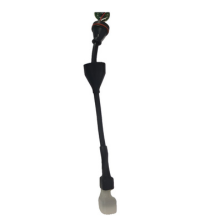
Sensor
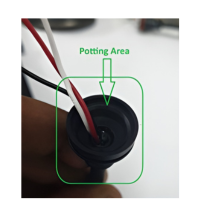
Potting Application Area
Understanding the Problem
Despite high output and stringent quality requirements, the customer was using a basic benchtop cartridge dispensing system that failed to meet production demands due to the following challenges:
These limitations compromised process reliability and significantly impacted operational efficiency and cost-effectiveness.
ADoST Solution
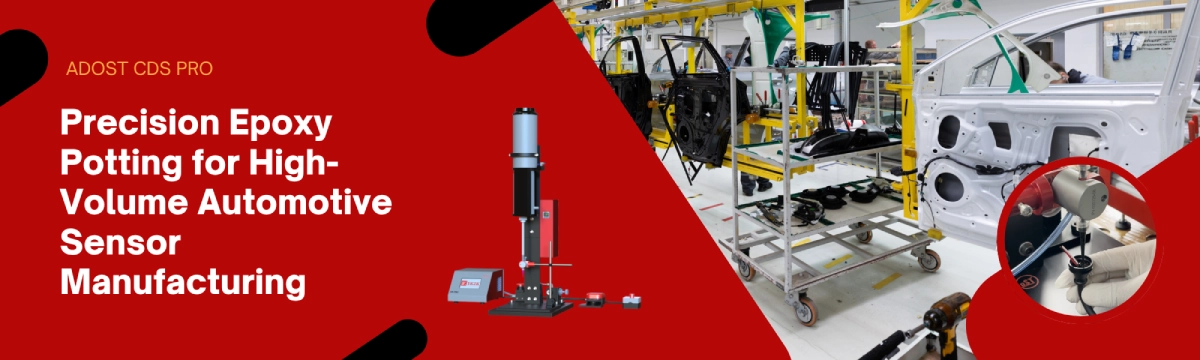
To address these challenges the customer partnered with the ADoST and the ADoST team conducted a thorough evaluation of the application process and recommended the ADoST CDS PRO — a purpose-built, precision dispensing system designed specifically for two part epoxy cartridge applications.
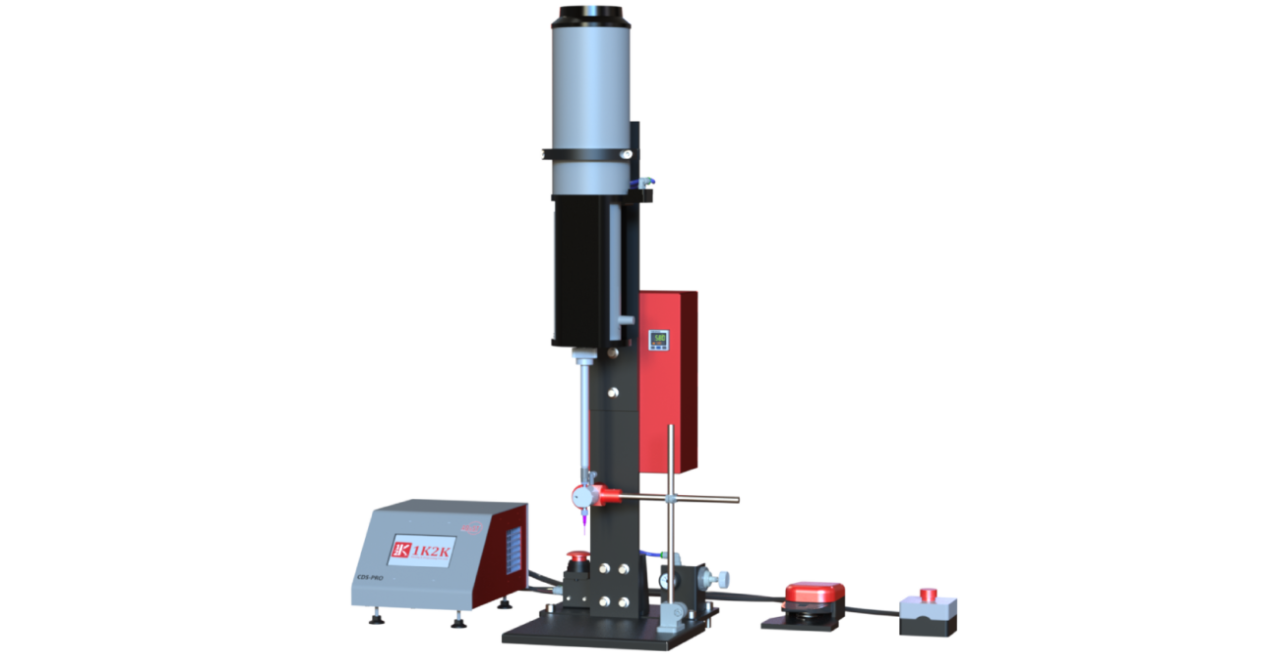
ADoST CDS PRO
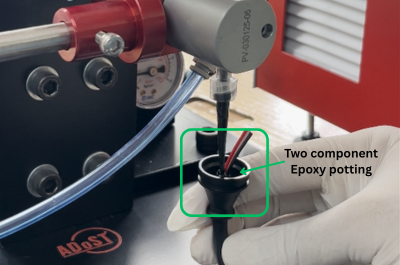
ADoST Dispensing. Repeatable and Consistent.
Customer Experience
Post-implementation of the ADoST CDS PRO system, the customer reported significant improvements:
Conclusion
The deployment of ADoST CDS PRO transformed the customer’s adhesive dispensing process from a manual, error-prone operation into a high-precision, reliable system. By solving key issues such as shot inconsistency, dripping, and maintenance complexity, the CDS PRO delivered measurable improvements in both quality and cost-efficiency.
This case reinforces ADoST’s commitment to delivering tailored, high-performance dispensing solutions that address real-world manufacturing challenges in the automotive electronics industry.